I still have nightmares about the first time I tried to make a bacon-wrapped meatloaf in my favorite cast-iron skillet.
I had seen a picture in a vintage diner cookbook of a glorious, rounded meatloaf encased in thick strips of bacon, glazed with barbecue sauce, and smothered in molten cheese. I thought I could replicate it on a cold Sunday afternoon with zero fuss. I grabbed two pounds of ground beef, pressed it into a giant ball right inside the skillet, wrapped raw, thick-cut bacon strips edge-to-edge around it, poured half a bottle of sweet barbecue sauce over the top, and shoved the entire pan into a 350°F oven.
An hour later, I opened the oven door to a disaster.
The raw bacon had never crisped. Instead, it sat there pale, rubbery, and flabby, trapping all the internal steam inside the beef while sweating an ocean of grease into the bottom of the skillet. The bottom half of the meatloaf was literally boiling in two inches of beef fat and liquefied bacon grease.
Worse, when I sliced into it, the unrendered bacon slid right off the meat like a wet towel, taking the sweet glaze with it. My partner took two bites, pushed the flabby bacon to the side of the plate, and said, “The flavor is good, but the texture is… adventurous.”
I was crushed. I love a loaded bacon cheeseburger more than almost anything, and bringing that smoky, sharp-cheddar, caramelized-barbecue flavor profile into a homestyle meatloaf should be pure comfort food magic.
It took me four test batches, some blunt advice from a local pitmaster, and a complete rethink of bacon physics to fix it.
You cannot wrap raw bacon over raw meat and expect the bacon to magically turn crisp in a humid oven. You have to par-cook the bacon strips so the fat begins rendering beforehand, form a rounded mound that lets excess drippings run off, and build your barbecue glaze and cheese mantle in strategic stages.
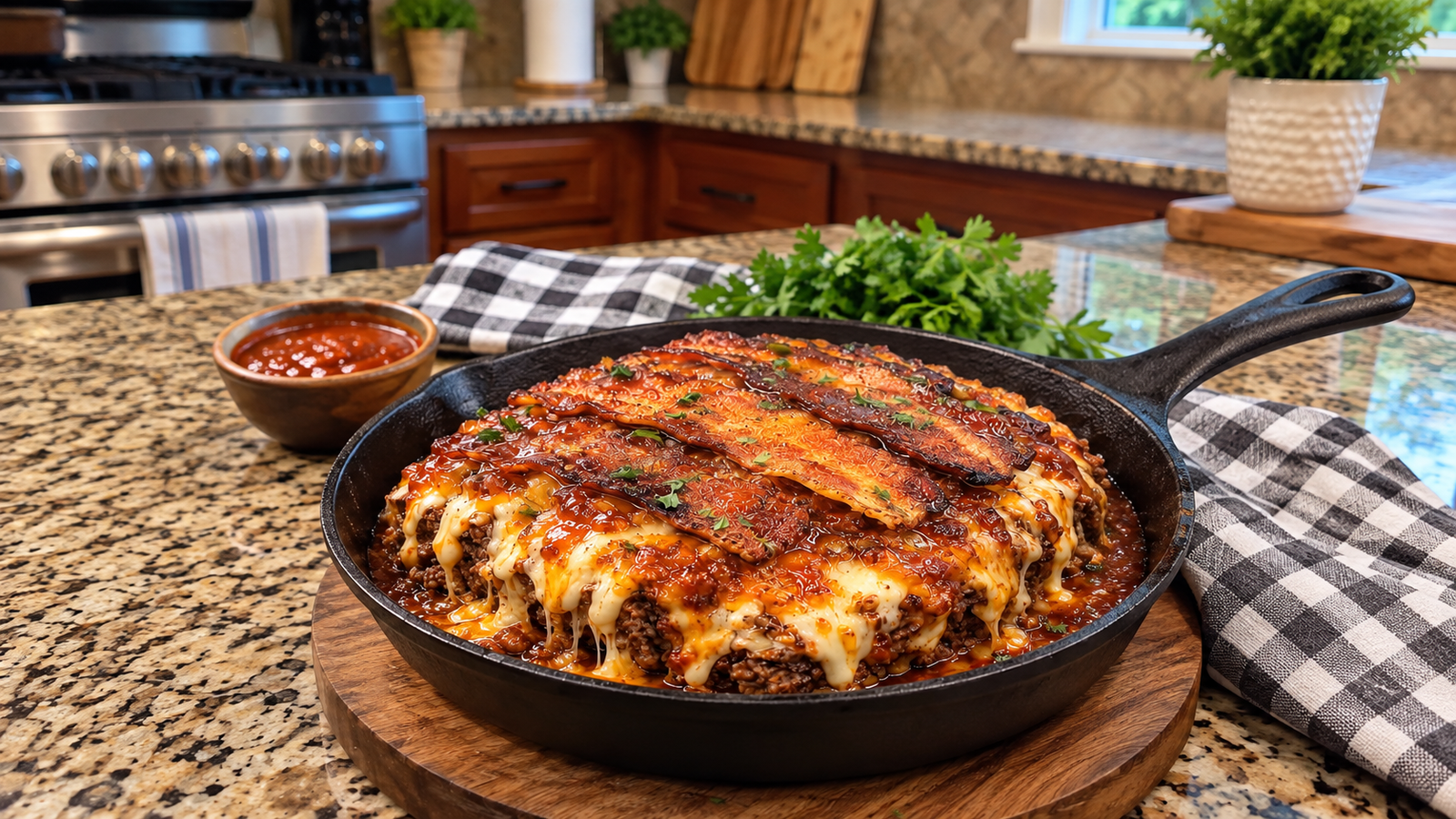
The photo above is the hard-won outcome: a giant, juicy, seasoned beef loaf baked in a heavy cast-iron skillet, smothered in sweet-tangy barbecue glaze, blanketed in bubbling melted sharp cheddar and Monterey Jack, and crowned with shatteringly crisp strips of caramelized bacon that stay snappy from first bite to last.
Here is how you make this skillet centerpiece at home without ending up with a pool of greasy, soggy bacon.
Why Bacon-Topped Meatloaf Fails (And the Science to Fix It)
Cooking bacon on top of ground beef inside an oven is a battle against surface moisture and trapped fat. Here is why so many versions turn into a rubbery mess:
1. The Raw Bacon Trap
Bacon needs direct radiant heat and continuous airflow to render its fat and crisp up. When you drape cold, raw bacon strips over a raw meatloaf, the rising steam from the cooking ground beef condenses underneath the bacon. That steam boils the bacon from the underside, keeping it pale and rubbery. Par-cooking your bacon strips on a baking sheet for just 6 to 8 minutes before placing them on the meatloaf kicks off the rendering process, so the oven heat can easily toast the strips into deep mahogany crunch.
2. High-Moisture Fillers vs. The Panko Panade
If you toss dry Italian breadcrumbs into raw ground chuck, they pull out the beef’s natural juices like tiny sponges. If you skip breadcrumbs entirely, the meat contracts into a dense, tight rock. The sweet spot is a panade: soaking light panko breadcrumbs in whole milk (or beef bone broth) until hydrated into a paste before combining with the meat. It acts as a moisture cushion, keeping the interior tender and juicy even under the heat of heavy cast iron.
3. Adding Cheese Too Early
If you cover the meatloaf with shredded cheese at minute zero, the dairy fat will separate into oily yellow pools long before the meat cooks through to 160°F. The cheese turns leathery and scorched. You must bake the glazed, bacon-topped loaf on its own first, then add your mountain of shredded cheddar and jack during the final 8 to 10 minutes so it melts into that luscious, stretchy, molten curtain seen cascading down the sides.
Ingredients & Kitchen Tools
Essential Gear
- 10- or 12-Inch Cast-Iron Skillet: (A heavy cast-iron skillet retains intense heat, searing the bottom of the loaf into a savory crust while catching the rich drippings).
- Baking Sheet & Paper Towels: For par-cooking and draining the bacon strips beforehand.
- Large Mixing Bowl: Gives you plenty of room to gently fold the meat without compacting the fibers.
- Digital Instant-Read Meat Thermometer: (A ThermoWorks ThermoPop or similar probe is mandatory; pull the meat based on internal temp, not the clock).
- Silicone Basting Brush: For painting the barbecue glaze across the loaf and bacon strips.
The Ingredient Breakdown
| Component | Ingredient | Quantity | Practical Role |
| The Meat Base | 80/20 Ground Chuck | 2 lbs (900g) | Ideal fat ratio; delivers bold steakhouse flavor without turning dry. |
| The Panade | Plain Panko Breadcrumbs | ¾ cup | Airy crumbs that cushion the beef fibers against tightening. |
| The Panade | Whole Milk or Beef Bone Broth | ½ cup | Hydrates the crumbs to create a tender, melt-in-your-mouth bite. |
| The Binders | Large Eggs | 2 whole | Lightly beaten to hold the round loaf together structurally. |
| Aromatic Core | Yellow Onion | 1 medium (finely diced) | Softened in butter before mixing so it doesn’t release raw water. |
| Aromatic Core | Fresh Garlic | 4 cloves (minced) | Delivers classic savory burger depth. |
| Savory Boosters | Worcestershire Sauce | 2 tbsp | Rich fermented umami backbone. |
| Savory Boosters | Tomato Paste or Yellow Mustard | 1 tbsp | Balances the rich beef with concentrated tang. |
| Smoky Seasoning | Smoked Paprika | 1 tsp | Enhances the smoky pit-style flavor profile. |
| Savory Seasoning | Garlic Powder & Onion Powder | 1 tsp each | Dry spices adhere directly to the ground meat for deep seasoning. |
| Base Seasoning | Coarse Kosher Salt & Black Pepper | 1.5 tsp salt, 1 tsp coarse pepper | Essential seasoning throughout the meat and glaze. |
| The Bacon Crown | Thick-Cut Smoked Bacon | 5 to 6 long strips | Par-baked and glazed across the top for crispy crunch. |
| The BBQ Glaze | Thick Smokey-Sweet Barbecue Sauce | ½ cup (divided) | Sweet glaze that caramelizes into a sticky mahogany lacquer. |
| The Cheese Blanket | Sharp Cheddar & Monterey Jack | 1.5 cups (freshly shredded from blocks) | Melts into that bubbly, gooey mantle cascading down the sides. |
| Finishing Touch | Fresh Flat-Leaf Parsley | 2 tbsp (finely chopped) | Sprinkled over the molten cheese for color and clean herbal brightness. |
Step-by-Step Cooking Instructions
Step 1: Par-Bake the Bacon (The Crucial Trick)
Preheat your oven to 375°F (190°C).
Line a rimmed baking sheet with aluminum foil. Lay your 5 to 6 strips of thick-cut bacon flat on the sheet without overlapping.
Bake the bacon for 6 to 8 minutes.
You are not cooking the bacon until it is crispy! You want it just par-cooked: the white fat should look translucent and softened, and a tablespoon of liquid grease should have rendered out onto the pan.
Transfer the limp, warm bacon strips onto a paper-towel-lined plate to drain.
Cook’s Real-Life Lesson: Par-cooking expels that initial heavy burst of grease onto your sheet pan rather than letting it drown the meatloaf inside the skillet. The bacon is now primed to crisp up under the final oven heat without going limp.
Step 2: Sauté the Aromatics
Melt 1 tablespoon of butter in your 10- or 12-inch cast-iron skillet over medium-low heat.
Add the finely diced yellow onion with a pinch of kosher salt. Cook gently for 6 to 8 minutes until the onion is soft, sweet, and translucent.
Stir in the minced garlic and cook for 60 seconds just until fragrant.
Remove the skillet from the heat. Scoop the cooked onions and garlic into a small bowl and let them cool for 5 minutes.
Do not wash the skillet—leave that light film of butter and onion fond right on the cast iron to flavor the bottom of the meatloaf.
Step 3: Build the Panade and Seasoning Slurry
In your large mixing bowl, combine the ¾ cup of panko breadcrumbs with the ½ cup of whole milk (or beef broth).
Stir with a fork and let it sit on the counter for 5 minutes until the breadcrumbs absorb all the liquid into a soft paste.
Crack the 2 eggs directly into the bowl with the soaked panko.
Add the cooled cooked onions and garlic, 2 tablespoons Worcestershire sauce, 1 tablespoon tomato paste (or mustard), 1 teaspoon smoked paprika, 1 teaspoon garlic powder, 1 teaspoon onion powder, 1.5 teaspoons kosher salt, and 1 teaspoon coarse black pepper.
Whisk vigorously with a fork until you have a smooth, uniform seasoning paste.
Step 4: Mix with an Open Hand
Add the 2 pounds of ground chuck into the bowl with your flavor paste.
Take off any rings, wash your hands, and spread your fingers like open rakes. Gently fold and toss the meat with the seasoning paste just until the streaks of panade disappear.
Stop mixing the second it comes together—roughly 30 to 45 seconds.
Never squeeze, knead, or compress ground beef like bread dough! Overworking the meat ruptures delicate fat pockets and binds the muscle fibers too tightly, resulting in a tough, bouncy loaf instead of a tender, crumbly bite.
Step 5: Shape the Skillet Mound
Turn the meat mixture directly into the center of your prepared cast-iron skillet.
Using damp hands (which prevents the beef from sticking to your skin), shape the meat into a rounded, compact mound roughly 7 to 8 inches in diameter and about 2.5 inches tall.
Make sure you leave at least a 1-inch moat of empty space between the edges of the meatloaf and the sides of the skillet.
This empty moat allows hot air to circulate freely around the sides of the beef, building a deep, savory crust while giving rendered pan juices a place to gather without drowning the meat.
Step 6: Glaze, Top with Bacon, and the First Bake
Brush ¼ cup of your thick barbecue sauce generously across the entire top and sides of the shaped meat mound.
Now, lay your par-cooked bacon strips across the top of the loaf, pressing them gently so they adhere to the sticky barbecue sauce.
Brush the tops of the bacon strips with a light smear of extra barbecue sauce.
Slide the skillet onto the middle rack of your preheated 375°F (190°C) oven.
Bake uncovered for 40 to 45 minutes.
During this initial roast, the meatloaf cooks through, the rendered juices bubble into the skillet moat, and the bacon crisps into a rich, golden-brown crust.
Step 7: The Molten Cheese Crown & Finish
Slide the probe of your digital instant-read thermometer into the thickest center of the loaf.
It should read around 150°F to 155°F (65°C to 68°C). (It will carry over to the safe 160°F mark while melting and resting).
Pull the hot skillet carefully out of the oven using heavy oven mitts.
Spoon another 2 tablespoons of barbecue sauce lightly over the top, then mound the freshly shredded sharp cheddar and Monterey Jack cheese generously across the loaf, letting generous handfuls cascade naturally down the rounded sides into the bubbling pan juices (just like the incredible view in the photo).
Return the skillet to the oven for 6 to 8 minutes.
To get that blistered, golden-brown gratin finish on the cheese and bacon edges, switch the oven to BROIL (High) for the final 2 minutes.
Watch closely through the glass door: the cheddar and jack will bubble aggressively, melt into a thick mantle, and toast into savory, caramelized blisters.
Remove the skillet immediately once the cheese looks molten and blistered.
Step 8: The Mandatory 10-Minute Rest
Do not try to slice the meatloaf right now!
If you cut into the loaf while it’s blazing hot, the molten cheese will slide off the meat, and the internal juices will rush straight out into the skillet, leaving your slices dry.
Set the cast-iron skillet on a wooden trivet or heatproof cutting board and let it rest undisturbed for 10 to 12 minutes.
During this rest:
- The meat fibers relax and pull the savory juices back into the beef.
- The bubbling cheese cools down just enough to form a cohesive, stretchy blanket that clings to every slice.
- The bacon sets into a firm, crispy crown that carves cleanly with a sharp knife.
Scatter fresh chopped flat-leaf parsley across the molten cheese and bacon, and serve directly from the rustic skillet with a flat metal spatula.
Practical Troubleshooting & Common Mistakes
- “There is a lot of grease bubbling around the base of the skillet.”
An 80/20 chuck blend naturally renders flavorful fat and pan juices. Having that liquid in the moat keeps the cast iron from smoking and seasons the bottom crust. If there is too much liquid before adding the cheese, simply use a bulb baster or large metal spoon to draw off a few tablespoons of grease from the sides of the skillet before returning it to the oven. - “The bacon wasn’t crispy enough.”
This happens if you used extra-thick slab bacon without par-cooking it long enough in Step 1, or if you skipped the final 2-minute broiler finish. Make sure the bacon is partially rendered before it goes on the meatloaf, and let the broiler give it that final direct radiant burst of heat. - “The cheese separated into a grainy film.”
Always avoid pre-shredded bagged cheese! Bagged cheese is dusted with potato starch and cellulose anti-caking agents that inhibit smooth melting and cause dairy fats to break into oily grease. Buy blocks of whole-milk sharp cheddar and Monterey Jack and grate them on a box grater for that velvety, stretchy blanket.
What to Serve with Cast-Iron Meatloaf & Handling Leftovers
This loaded skillet is the ultimate crowd-pleasing comfort dinner. Pair it with sides that can handle bold barbecue and savory cheese:
- Garlic Butter Mashed Potatoes: Spoon the sweet barbecue pan juices that collect at the bottom of the cast-iron skillet directly over a mound of creamy Yukon Golds.
- Crispy Vinegar Coleslaw: Shredded cabbage tossed in a tangy apple cider vinaigrette brings a crisp, refreshing crunch that cuts through the rich bacon and cheese.
- Warm Skillet Cornbread: Served with salted honey butter to catch every runaway drop of sauce.
If you have leftover slices, wrap them securely in foil and store them in the refrigerator for up to 4 days.
Because the bacon and cheese set firmly overnight, cold leftover slices carve like steak.
For the ultimate next-day lunch, butter two thick slices of Texas toast or sourdough, warm a slice of meatloaf in a buttered skillet until the cheese gets gooey again, and grill the sandwich until golden-brown on both sides. It makes one of the greatest gourmet bacon patty melts you will ever taste.