Let me share a kitchen nightmare that almost ruined my confidence in cooking for a crowd. A few years ago, I invited my in-laws over for a special Sunday dinner and decided to make a classic beef roast. I spent a small fortune on a beautiful cut of meat, threw it in a roasting pan with some chopped vegetables, and crossed my fingers.
When it was time to carve, the meat was so dry it practically turned to dust on the cutting board, and the potatoes underneath were hopelessly burnt. I ended up drowning everything in store-bought gravy just to make it swallowable. I realized right then that cooking a large, expensive hunk of beef is genuinely intimidating. It feels like there is a massive margin for error, and nobody wants to chew on dry, leathery meat.
I spent months trying different methods to fix this. I tried slow cookers, foil packets, and endless marinades. But the absolute breakthrough happened when I stopped trying to keep the meat dry-roasted and started cooking it directly in a rich, creamy pan sauce.
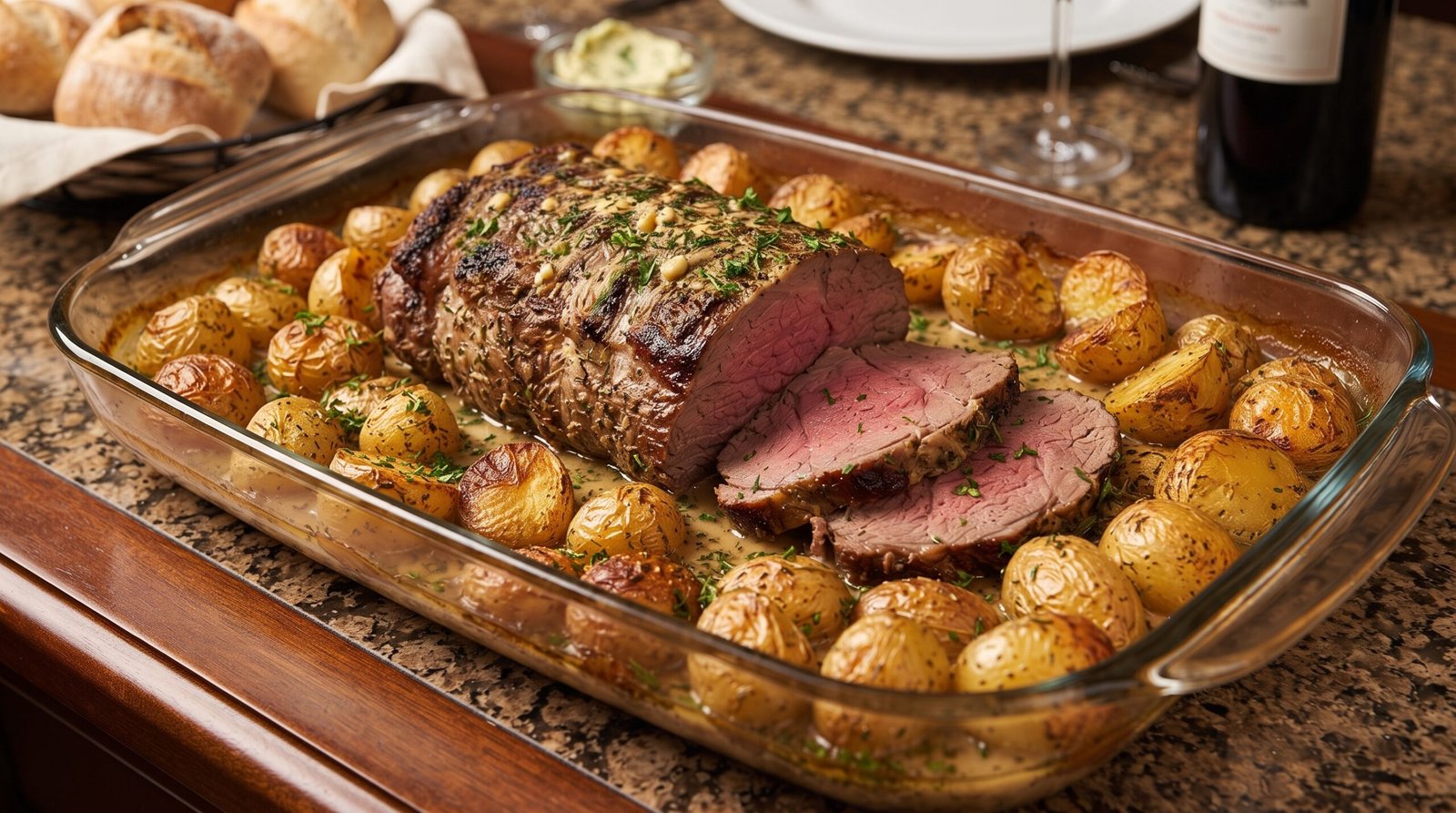
If you want to see exactly what success looks like, pull up the file named image_ce8c1b.jpg. Look at that glorious, thick beef roast sitting right in the center of a clear glass baking dish. You can physically see the tender texture of the beef as a knife glides through it, releasing those savory juices into a bubbling, creamy garlic and herb sauce. Surrounding the meat is a perfect border of halved baby potatoes, roasted until they are deeply golden and caramelized.
This is not your dry, old-school Sunday roast. This is an incredibly juicy, flavor-packed dinner that cooks the meat and the side dish all in one pan. Let’s walk through exactly how to pull this off without the stress.
Why Cooking Beef in a Cream Sauce is a Game-Changer
Most traditional roast recipes tell you to elevate the meat on a rack so it stays dry. While that works for prime rib, leaner or more budget-friendly cuts of beef need help retaining moisture.
By roasting the beef directly in a shallow bath of beef broth, heavy cream, butter, and garlic, you are essentially basting the meat from the bottom up. As the oven heat reduces the liquid, it thickens into an incredible gravy that clings to the beef. At the same time, the halved baby potatoes soak up all that seasoned cream and the natural beef drippings. You end up with potatoes that are crispy on top but melt-in-your-mouth creamy on the bottom.
Choosing the Right Cut of Beef
You do not need an $80 prime rib to make this work, but you do need to pick the right roast.
I highly recommend a Top Sirloin Roast or an Eye of Round Roast for this specific method. These cuts slice beautifully into clean, neat portions—exactly like the firm, sliceable beef being carved with a knife and fork in our reference photo. Avoid chuck roasts for this specific recipe; chuck is heavily marbled with fat and connective tissue, meaning it needs to cook for hours until it shreds apart like pot roast. We want a roast we can slice, not shred.
Getting Your Kitchen Ready: Tools You Actually Need
You don’t need a commercial kitchen to make an elegant dinner. Keep it simple and stress-free with these basics:
- A 9×13 Glass or Ceramic Baking Dish: A glass dish, like the rectangular one shown holding the meat and potatoes, is perfect because you can easily keep an eye on how the sauce is reducing.
- A Heavy Cast-Iron Skillet: For searing the beef before it goes into the oven.
- A Digital Meat Thermometer: This is non-negotiable! You cannot guess when a thick roast is done. A quick-read thermometer like a Thermapen will save you from dry meat.
- A Sharp Carving Knife and Meat Fork: You need a long, sharp blade to get those clean, professional slices right in the pan.
The Ingredient Lineup
Gather these ingredients before you start. Having everything prepped makes the cooking process feel effortless.
| Ingredient | Amount | Notes |
| Beef Roast | 2.5 to 3 lbs | Top Sirloin or Eye of Round, brought to room temperature. |
| Baby Gold Potatoes | 1.5 lbs | Sliced perfectly in half. Don’t use Russets; they will disintegrate in the sauce. |
| Butter | 4 tbsp | Unsalted, to build the rich garlic herb sauce. |
| Heavy Cream | 1 cup | Creates the velvety, luxurious pan gravy. |
| Beef Broth | 1/2 cup | Adds savory depth to balance the heavy cream. |
| Fresh Garlic | 6 cloves | Minced heavily. You can actually see the bits of minced garlic clinging to the top of the sliced meat in the photo. |
| Fresh Herbs | 2 tbsp | Fresh thyme and rosemary, chopped fine. Dried herbs work, but fresh is better. |
| Olive Oil | 2 tbsp | For getting a hard sear on the beef. |
| Seasonings | to taste | Kosher salt and freshly cracked black pepper. |
Let’s Get Cooking: Step-by-Step
Step 1: Prep and Season the Meat
Take your beef roast out of the refrigerator at least 45 minutes before you plan to cook. Meat that is freezing cold in the center will cook unevenly in the oven. Pat the roast completely dry with paper towels. Rub it generously with olive oil, kosher salt, and coarse black pepper.
Step 2: The Mandatory Sear
Preheat your oven to 375°F (190°C). Place your cast-iron skillet on the stove over medium-high heat. Once the pan is screaming hot, place the roast in the skillet. You want to sear every single side of the beef until it develops a dark, crusty brown exterior. This usually takes about 2 to 3 minutes per side. Do not skip this! The oven won’t brown the meat enough because it will be sitting in liquid. Once seared, transfer the beef to the center of your glass baking dish.
Step 3: Arrange the Potatoes
Take your halved baby gold potatoes and arrange them in a neat border all the way around the beef in the baking dish. Make sure the cut sides are facing down so they can soak up the flavors and get tender against the hot glass.
Step 4: Build the Garlic Herb Cream Sauce
In the same skillet you used to sear the beef, turn the heat down to medium-low. Melt your butter and toss in your minced garlic and chopped fresh herbs. Let them sizzle for about 30 seconds until your kitchen smells amazing.
Pour in the beef broth to deglaze the pan, scraping up all those dark, savory beef bits stuck to the bottom. Finally, pour in the heavy cream. Let it simmer for two minutes until it slightly thickens, then pour this entire glorious sauce directly over the beef and the potatoes in the baking dish.
Step 5: The Oven Braise
Put the uncovered baking dish into the preheated oven. Bake it for about 35 to 45 minutes.
This is where your meat thermometer becomes your best friend. Start checking the temperature at the 30-minute mark. For a perfect, juicy medium-rare, you want to pull the pan out of the oven when the very center of the roast hits 130°F (54°C). If you prefer medium, aim for 140°F (60°C).
Step 6: The Critical Rest Time
When you pull the dish out of the oven, the sauce will be bubbling and the potatoes will be golden. Resist every urge to cut into that meat right away.
You must let the roast rest in the pan for at least 15 minutes. If you take a knife to it immediately, all the internal juices will flood out onto the pan, leaving the beef dry. Resting allows the muscle fibers to relax and pull those juices back into the center.
After 15 minutes, grab your knife and meat fork, slice the beef right there in the pan, and watch that creamy pan sauce drape right over the fresh slices.
My Biggest Kitchen Fails (So You Can Avoid Them)
I’ve messed this up enough times to know exactly where things go wrong. Here is what to watch out for:
- Using the Wrong Potatoes: I tried this once with regular baking potatoes that I chopped into cubes. The starch content was too high, and they completely broke down, turning my beautiful garlic cream sauce into a thick, paste-like mashed potato soup. Stick to waxy potatoes like baby golds or red potatoes.
- Boiling the Cream: When you make the sauce on the stove, keep the heat moderate. If you bring heavy cream to a violent, rolling boil, it can split and curdle. You want a gentle simmer.
- Slicing With a Dull Knife: If you try to carve a tender roast with a dull knife, you will end up tearing and shredding the meat instead of getting those clean, beautiful portions. Keep your carving knife honed!
What to Serve Alongside Your Roast
Because this meal is incredibly rich, savory, and protein-heavy, you want your side dishes to provide a sharp, acidic contrast.
I love serving this with a simple side of blistered green beans tossed in a little lemon juice and olive oil. A massive, crisp garden salad with a sharp vinaigrette dressing also does wonders to cut through the heavy cream sauce. And, naturally, you are going to need some crusty French bread or dinner rolls to mop up every last drop of that garlic butter sauce from your plate.
Storing and Reheating the Leftovers
If you are lucky enough to have leftovers, let the meat and potatoes cool completely. Store them together in an airtight container in the fridge for up to 3 days.
When reheating beef, the microwave is your worst enemy. It will instantly cook the meat past medium-rare and turn it gray and rubbery. Instead, place the leftover slices and potatoes in a skillet over low heat. Add a tiny splash of beef broth to loosen up the cream sauce, put a lid on the pan, and warm it gently for about five minutes just until heated through.
Cooking a stunning, impressive dinner doesn’t have to require a mountain of dirty dishes and a mild panic attack. By utilizing a single glass pan and letting a rich cream sauce do all the heavy lifting, you can pull off a centerpiece meal that looks and tastes like a million bucks. Go grab a meat thermometer and a roast, and give this a try this weekend. Happy cooking!